
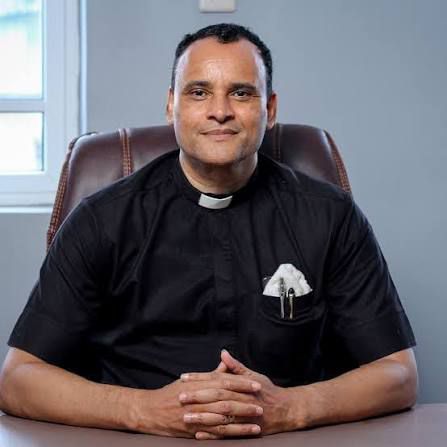
Rev. Theodore Effiong has expressed strong confidence in Nigeria’s potential, saying the country should never be written off despite its many challenges.
“Nigeria is great,” he said.
Effiong pointed to Nigeria’s oil wealth as evidence that the country possesses valuable resources capable of supporting significant development.
Nigeria officially had about 37.01 billion barrels of oil and condensate reserves as of January 1, 2026, according to the Nigerian Upstream Petroleum Regulatory Commission.
He compared Nigeria’s situation with oil-rich countries such as Saudi Arabia and the United Arab Emirates, arguing that effective management of natural resources can translate into infrastructure, education and improved living standards.
Saudi Arabia does provide free public education, including free government schooling and tuition-free public university education for Saudi citizens in regular programs.
However, some of the specific figures Effiong mentioned should be treated cautiously.
His statement that Dubai has “57 oil wells” is not a reliable way to compare petroleum wealth. The UAE as a whole had about 120 billion barrels of proven crude oil reserves in 2025, far more than Nigeria’s roughly 37 billion barrels.
Likewise, the “76 oil wells” associated with Cross River State refer to a long-running and disputed offshore boundary and derivation issue between Cross River and Akwa Ibom, not a simple undisputed count of oil wells currently belonging to Cross River.
Effiong’s central argument, however, was about leadership.
“The day a correct leader takes over Nigeria, Nigeria will become heaven on earth,” he said.
That is his political and economic assessment rather than a measurable prediction, but his broader point was that Nigeria’s resources alone are not enough. What matters is how those resources are managed.
His message was simple: Nigeria has significant resources, but resources only become transformational when they are wisely managed.