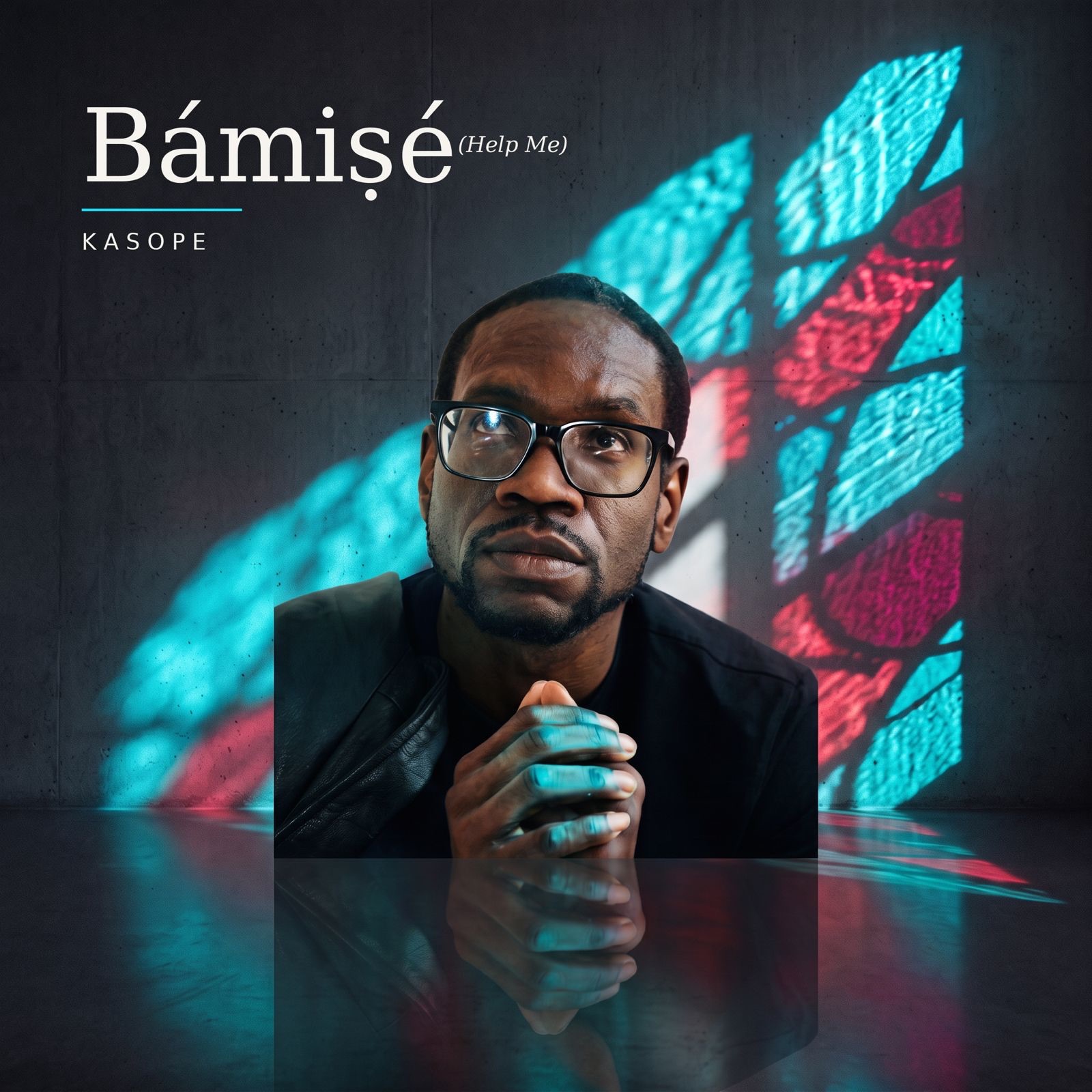
1. Please introduce yourself to our readers. Who is Kasope, and how did your journey into gospel music begin?
Answer:
My name is Kasope, also known as Kasopefoluwa Adegboyega Sote. I am a Nigerian-British gospel singer, songwriter, and multidisciplinary creative professional based in the UK. Beyond music, I work in illustration, animation, and creative design.
My journey into music began in the church at 17, where I developed my love for singing and serving God through music. Over the years, that passion grew into songwriting, and I have written close to 100 songs. I honed my musical skills as a vocalist and tenor leader in the New Sweeter than Honey Choir of the Redeemed Christian Fellowship, University of Ibadan. I was taught to play the guitar by my mother, Adetoun Sote, who was a singer and guitarist herself. I was also a founding member of the gospel music group Made In Heaven, where I served from 2015 to 2022.
Music has always been more than just a creative outlet for me. It is a way to express my faith, share my experiences, encourage people, and point them towards God. My desire is to create music that people can connect with spiritually and emotionally, especially in moments when they need hope, healing, and reassurance of God’s presence.
- What inspired your new song, “Bámiṣé (Do It for Me)”?
Answer:
“Bámiṣé” was inspired by the understanding that, no matter how talented, hardworking, or capable we are, there are certain things in life that only God can do. There are seasons when our strength, wisdom, connections, and efforts are simply not enough, and we have to depend entirely on Him.
The song is a prayer from a place of surrender. It is me saying to God, “Lord, I need You. Please help me. Do for me what I cannot do for myself.”
I believe many people can relate to that feeling. Sometimes, we do not even have the right words to explain what we are going through. All we can do is cry out to God for help. “Bámiṣé” gives expression to that prayer.
- Is there a personal experience or story behind the song?
Answer:
Yes, there is a personal side to the message of the song. Losing my mum in 2019 was one of the most difficult experiences of my life. She was my biggest fan and one of the people who encouraged me the most in my music journey. Her passing left a significant void in my life, and it made me reflect deeply on life, purpose, and my dependence on God.
After losing her, I found myself asking questions about the future and what life would look like without someone who had been such an important source of love and encouragement. That season influenced some of the songs I wrote, including “Nothing’s Impossible for You.”
“Bámiṣé” comes from that same place of recognising my need for God, although its message goes beyond my personal experience. Life brings different challenges to everyone, whether it is grief, financial difficulty, uncertainty, disappointment, or the fear of what lies ahead.
Sometimes, you reach a point where all you can say is, “God, please help me. I cannot do this without You.” That is the heart behind the song.
- What does the title “Bámiṣé” mean to you, and why did you choose it for this particular song?
Answer:
“Bámiṣé” is a Yoruba expression that, in the context of the song, means “Help me” or “Do it for me.” It is a simple but powerful prayer that acknowledges our dependence on God.
I chose the title because it captures the entire message of the song in one expression. Sometimes, we try to find elaborate words to communicate with God, but a sincere cry for help can be just as powerful.
For me, “Bámiṣé” is not about asking God to do everything while we do nothing. It is about recognising that, despite our efforts, we still need His grace, wisdom, intervention, and direction. It is a prayer of surrender, trust, and dependence.
- What message do you hope listeners will receive when they listen to the song?
Answer:
I want listeners to know that it is okay to admit that they need help, especially God’s help. We sometimes feel pressured to appear strong, to have everything figured out, and to convince everyone that we are doing fine. But God is not asking us to pretend. We aren’t perfect, we fall short sometimes, can get angry, feel hopeless or depressed, but we have a God who we can run to as our place of safety to help us.
My prayer is that when people listen to “Bámiṣé,” they will feel encouraged to come honestly before God, regardless of what they are going through.
Whether you are waiting for a breakthrough, trying to make sense of a difficult season, trusting God for a spouse or child, grieving a loss, exercising your faith for healing, or simply unsure of your next step, you can call on God. You do not have to have all the answers before you pray.
The song is a reminder that we have a Father we can depend on, even when life feels uncertain.
- How would you describe your style of gospel music and the kind of audience you hope to reach?
Answer:
I would describe my music as inspirational gospel rooted in worship, prayer, heartfelt storytelling, and a deep desire to connect people with God. I enjoy creating songs that communicate genuine emotions and spiritual truths in ways people can relate to.
My music explores themes such as hope, faith, healing, restoration, deliverance, and the assurance that nothing is impossible with God. The lyrics of another of my songs titled “Ogo” simply say to God, “Take all the glory,” even in my circumstances.
I want my songs to be meaningful both to people who have walked with God for many years and to those who may be searching for hope or trying to understand their faith.
Ultimately, I want to make music that ministers beyond the church walls. Whether someone is listening at home, driving to work, going through a difficult season, or spending time in prayer, I hope the music reminds them of God’s love and faithfulness.
- As a Nigerian-British gospel minister, how has your background influenced your music and ministry?
Answer:
My Nigerian heritage has given me a strong connection to African expressions of worship, particularly the richness of Yoruba language and the warmth and depth of Nigerian gospel music. I grew up having a strong appreciation for the Yoruba language. My father, veteran journalist and columnist Lekan Sote, ensured that we had a good grasp of the language. He bought and read Yoruba books written by Nigerian author D. O. Fágúnwà to us as children, including Ògbójú Ọdẹ nínú Igbó Irúnmalẹ̀, which Nobel Laureate Wole Soyinka translated into a book titled The Forest of a Thousand Demons, and Igbó Olódùmarè, among others. He also taught me how to use the diacritics, or accent marks, above Yoruba vowels, which helped me develop a better understanding of the language.
At the same time, living in the UK exposes me to different cultures, musical influences, and ways of communicating.
I believe both experiences contribute to my creative expression. For example, using a Yoruba title like “Bámiṣé” allows me to preserve a part of my cultural identity while communicating a message that is universal. You do not have to speak Yoruba to understand what it means to need God’s help. The music video contains translations in English and French so that non-Yoruba speakers can be carried along.
My background has also taught me the importance of making music that crosses cultural and generational boundaries. Faith is universal, and I want my music to reach people wherever they are, while remaining authentic to who I am.
- Can you tell us about the recording and production process of “Bámiṣé”?
Answer:
“Bámiṣé” was produced by Olaitan Dada, and working with him helped bring the song’s message to life musically. Olaitan Dada is an amazingly blessed musician, producer, and sound engineer. Before each recording session with him, we always pray. I remember playing the song to him in 2024, and he loved it immediately.
The heart of the production process was ensuring that the production supported the prayer behind the lyrics. I wanted the song to communicate sincerity, vulnerability, and dependence on God rather than simply sound good musically. Olaitan Dada understood the core message behind the song and was able to support me through the musical arrangement, vocal direction, production direction, and so many other things. God bless him.
For me, songwriting begins with the message. I pay attention to what I want to communicate, the emotions behind the words, and how the melody can help people connect with that message. With “Bámiṣé,” the aim was to create something people could sing along to and make their own prayer.
I am grateful for the opportunity to work with a producer who understands the importance of translating a musical idea into a finished recording that communicates its intended message.
- What inspired the concept and direction of the music video?
Answer:
The music video was inspired by the realities of life and the moments when we come face to face with our limitations. I wanted the visuals to tell a story that people could recognise, especially those who have experienced grief, rejection, financial struggles, loneliness, or uncertainty about the future.
The concept follows a creative man navigating difficult circumstances after losing his mother. As he faces emotional pain and life’s pressures, he reaches a point where he turns to God in prayer and surrender.
The visual journey moves from darker, colder moods towards warmer golden tones, reflecting a gradual shift from despair towards hope, faith, and renewed perspective. The intention was not to suggest that every problem disappears instantly, but to communicate that we can find hope and strength in God’s presence, even while navigating difficult circumstances.
I wanted the video to complement the song by showing what “Bámiṣé” can look like in real life: a person reaching the end of their strength and choosing to depend on God.
- What role does your Christian faith play in your music and songwriting?
Answer:
My Christian faith is at the centre of my music. It shapes the messages I write about, the stories I tell, and the kind of impact I hope my songs will have.
For me, gospel music is not just about creating songs with Christian words. It is about communicating truth, encouraging people, and pointing them towards God. My personal experiences, including moments of joy, grief, uncertainty, and growth, often influence my songwriting, but my faith helps me process those experiences and find meaning in them.
I want my music to reflect an honest relationship with God, not one that ignores life’s difficulties, but one that acknowledges those difficulties while holding on to His faithfulness.
My prayer is that my songs will encourage people to trust God more deeply and remind them that they can turn to Him in every season of life.
- What are some of the challenges you have experienced in your music journey, and how have you overcome them?
Answer:
One of the biggest challenges has been learning how to balance music with other responsibilities and my work as a creative professional. Music requires time, consistency, resources, and a great deal of emotional investment. As an independent artiste, you often have to think beyond the music itself and also consider production, promotion, distribution, visuals, and audience engagement.
There have also been seasons of waiting, uncertainty, and personal loss. Losing my mum was particularly difficult because she was such an important source of encouragement in my life.
I have learned that the journey is not always straightforward, and progress does not always happen at the pace we expect. My faith in God, the support of people who believe in what I do, and the conviction that there is still a purpose for the gifts I have been given have helped me keep going.
I am also learning to approach music with greater intentionality, to keep developing my craft, and to understand that building something meaningful takes patience and consistency.
- Are there any gospel ministers, artistes or people who have greatly influenced your journey?
Answer:
My earliest and most important influence was my mother. I grew up listening to her sing and play the guitar. She had a beautiful voice and composed a number of songs. My mum played a significant role in my journey. She was my biggest fan and consistently encouraged me in music. Her belief in me remains a meaningful part of my story.
I come from a line of musical people. My great-grandfather, Jacob Bartholomew Aboaba, was a church organist and also played the harmonium. My grandfather, Pastor (Professor) Fola Aboaba, was a gifted baritone who composed classic church choruses such as “Come and take your place, oh Lord” and “Thank You, Lord, thank You, Lord, all I have to say is thank You, Lord.” He was a pastor at the Redeemed Christian Church of God.
In addition to this, the church environment also influenced my voice, where I developed my love for singing and learned to see music as a way to serve God.
I have also been influenced by the gospel music culture I grew up around, particularly the way Nigerian gospel music combines heartfelt worship, prayer, rich melodies, and powerful declarations of faith.
Beyond artistes and ministers, I believe everyday people and their experiences influence my songwriting. The things people go through, the prayers they whisper, the questions they ask, and the testimonies they share all remind me that music can be a powerful way to communicate hope.
- How has the response to “Bámiṣé” been since its release?
Answer:
I am grateful for the opportunity to share “Bámiṣé” with listeners and viewers, and I see every opportunity for someone to encounter the song as meaningful. The message is very personal to me, but I believe it speaks to something many people experience: the need for God’s help in situations beyond their control.
I hope the song continues to reach people who need encouragement and becomes a prayer they can return to in different seasons of their lives.
For me, the impact of a song is not measured only by numbers. It is also about whether the message connects with someone, strengthens their faith, or gives them words to express what they are going through.
I am thankful to everyone who has listened, shared the song, supported the release, or taken time to engage with its message. The feedback has indeed been greatly encouraging, as I’ve received testimonies about how the song rekindled hope not just in Nigeria, but also in the UK, Ghana, and Kenya. I look forward to hearing more stories of how it connects with people.
- What should people expect from Kasope after this release? Are there any upcoming songs, projects, collaborations or events?
Answer:
People should expect more music that is honest, faith-filled, and rooted in real experiences. I have written many songs over the years, and there are still so many messages and stories I want to share through music. I have a song titled “Ogo” which will be available on all streaming platforms on my birthday, the 10th of November 2026. Also, the music video for my worship single “Nothing’s Impossible for You” is in the works, as well as my Afro-gospel collaboration with ace producer Olaitan Dada titled “Kòsẹ́ni.”
I am looking forward to continuing to develop my sound, release more music, explore meaningful collaborations, and create visual content that complements the messages in my songs. As someone who also works in illustration and animation, I am particularly interested in bringing music and visual storytelling together in creative ways.
My desire is to build a body of work that people can return to for encouragement, prayer, worship, and reflection. I am taking the journey one step at a time, trusting God for direction and remaining committed to the work.
There is more to come, and I hope listeners will continue to follow the journey.
- Where can people connect with you and follow your music online?
Answer:
People can connect with me and follow my music through my social media platforms and YouTube channel.
- Instagram and Twitter: @iamkasope
- YouTube and Facebook: Kasope
You can also search for Kasope, Nothing’s Impossible for You, Ogo, and “Bámiṣé” on all major digital music streaming platforms to listen to the songs.
I would love for people to listen, share the music with friends and family, and join me on this journey. Their support means a great deal, and I am always grateful to connect with people whose lives are touched by the music.
- Finally, what message would you like to leave with everyone reading this interview?
Answer:
I want to encourage everyone reading this to always put God as your number one priority in life. Your time with Him every day is your most important time of the day. Please remember that it is okay to need help. You do not have to pretend to be strong all the time, and you do not have to have your entire life figured out before you can trust God.
There may be seasons when you pray and the answers do not come when you expect them. There may be moments when you feel alone, overwhelmed, or uncertain about what lies ahead. But do not let those moments convince you that your story is over.
Keep trusting God, keep taking the steps you can take, and give yourself room to grow through the process. Sometimes, the most sincere prayer you can offer is simply, “Lord, please help me. Bámiṣé.”
That is the heart of my new song, and it is a reminder I need for myself as much as anyone else. May we all learn to depend on God more deeply and find hope in Him, whatever season of life we are walking through.
Thank you to Kingdomboiz Blog for this opportunity, and thank you to everyone supporting my music. God bless you.